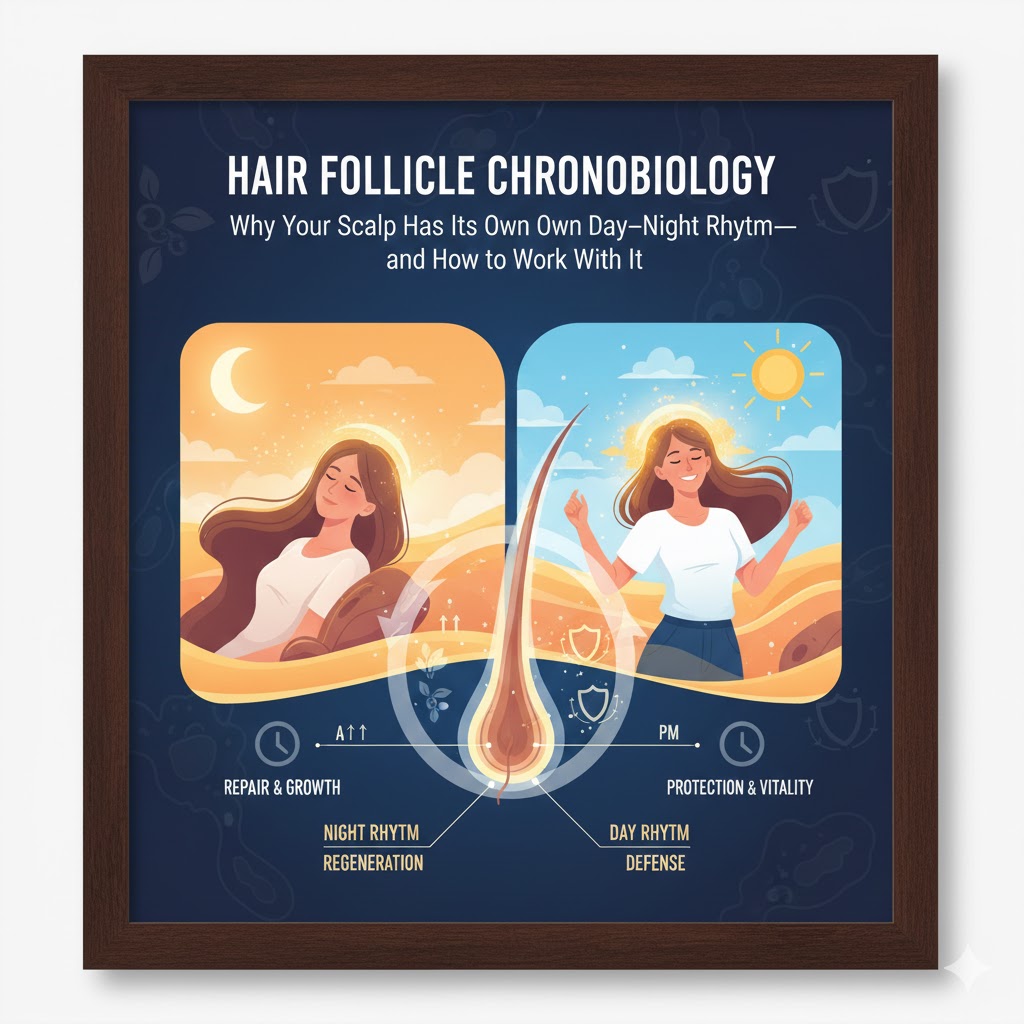
Most people assume hair grows at a steady, predictable pace—always “on,” always the same. But modern chronobiology research paints a far more fascinating picture: your scalp operates on its own internal 24-hour clock, and your hair follicles follow daily rhythms that influence oil production, blood flow, cellular repair, and even shedding.
At ZMD Hair, we’ve long emphasized that hair health isn’t just about genetics or treatment—it’s about understanding how your scalp behaves, heals, and reacts throughout the day. When patients learn to work with their follicular clock instead of against it, treatments become more effective, shedding reduces, and scalp balance improves significantly.
This blog breaks down the science behind your scalp’s circadian rhythm and reveals practical ways you can support your hair growth cycle from morning to night.
Understanding Hair Follicle Chronobiology
Chronobiology is the science of biological rhythms—the internal clocks that tell different tissues in your body when to rest, regenerate, or go into repair mode. Just like your sleep cycle or hormone release patterns, your hair follicles follow a cadence that repeats every 24 hours.
Each follicle contains its own “mini clock” regulated by genes like CLOCK, BMAL1, PER1, and CRY, which turn cellular activity on and off at specific times. This built-in timing system determines:
- When follicles absorb nutrients
- When scalp inflammation peaks
- When stem cells trigger repair
- When shedding is more likely
- When the growth phase becomes active
In other words: your hair is not doing the same thing at 8 a.m. as it is at 8 p.m.
Why Your Scalp Behaves Differently in the Morning vs. Evening
Morning: The “Protection” Phase
During daylight hours, your hair follicles shift into defense mode. They’re more alert to environmental stressors like UV rays, heat, pollution, and mechanical tension.
In the first half of the day, research shows:
- Sebaceous (oil) activity increases, helping protect the scalp
- Inflammation sensitivity is higher, making rough brushing or tight styling more damaging
- Blood flow is lower, meaning topical products absorb less efficiently
- Cortisol levels peak, which can aggravate shedding in sensitive scalps
This is why people prone to shedding often notice more breakage when styling in the morning.
Evening: The “Repair and Regeneration” Phase
Once evening arrives, your scalp shifts its biological priorities. Follicular stem cells become more active, and the repair cycle kicks in.
During nighttime:
- Cellular repair increases
- Blood flow improves, delivering more nutrients
- Topical treatments penetrate more deeply
- Hair follicle inflammation decreases
- Melatonin levels rise, which supports growth phase regulation
This is the window when your scalp heals from the day’s stressors—and when properly timed treatments can make a major difference.
The Science Behind Scalp Rhythms and Hair Growth
Your hair growth cycle—anagen (growth), catagen (transition), and telogen (resting)—is well known. But fewer people realize that within these long phases, follicles also run short daily cycles that affect:
1. DNA Repair
Follicular cells repair UV-induced damage at night, when repair genes are most active. Applying nourishing serums before bed supports this process.
2. Inflammation Regulation
Cytokine activity fluctuates throughout the day. Conditions like psoriasis, seborrheic dermatitis, or stress-induced inflammation often worsen during morning hours and ease by evening.
3. Stem Cell Activation
Hair follicle stem cells responsible for growth are most active in the late evening. This is when your scalp is biologically primed to respond to treatments like growth factor therapy, LLLT devices, or nutrient-rich tonics.
4. Microcirculation
Blood flow increases after sunset, improving oxygen delivery to follicles. This is crucial for patients with miniaturizing or weakened hair bulbs.
How to Work With Your Scalp’s Day–Night Rhythm
You don’t need to overhaul your routine to benefit from follicle chronobiology—just align it with your body’s natural timing.
Morning Routine (Protect & Prevent Damage)
- Gentle Detangling Only
Avoid aggressive brushing. Your follicles are more reactive in the morning and more easily irritated. - Use Lightweight, Protective Products
Antioxidant sprays or light serums can shield the scalp against UV and pollution. - Avoid Tight Hairstyles
High cortisol + high sensitivity = increased risk of traction stress. - Limit Heat Styling
Your follicles are in “defense mode,” not repair mode, making them more vulnerable. - Shield Your Scalp If You’re Outdoors
UV exposure contributes to oxidative stress and telogen shift.
Evening Routine (Repair, Nourish, Strengthen)
- Apply Growth Serums or Topicals at Night
Absorption and response rates are significantly higher once your scalp enters repair mode. - Use Scalp Massage to Boost Circulation
Not only does circulation improve naturally at night—massage amplifies this effect. - Pair Nighttime Routine With Stress Reduction
Stress management supports melatonin and reduces cortisol, both crucial for follicular recovery. - Sleep Is a Treatment—itself
Quality sleep amplifies DNA repair and growth signaling within follicles.
Why Ignoring Your Scalp’s Rhythm Can Slow Recovery
When patients apply treatments at the wrong time or style aggressively during follicular “high sensitivity” hours, they often see:
- Increased breakage
- More shedding
- Slower response to treatments like PRP or LLLT
- Irritated, inflamed scalp
- Dull or brittle strands
Aligning your care routine with chronobiology can significantly improve both treatment outcomes and natural regrowth.
How ZMD Hair Uses Chronobiology in Our Treatment Plans
At ZMD Hair, we integrate scalp physiology, hormonal patterns, and chronobiology into every individualized treatment plan. This means understanding not just what your hair needs—but when it needs it most.
Our approach includes:
- High-resolution scalp imaging to identify inflammation timing
- Chrono-targeted topical regimens
- PRP and growth factor therapy scheduled for optimal biological response
- Nutritional guidance to support circadian regulation
- Stress and sleep evaluations to harmonize the follicular clock
Patients who follow timing-optimized care typically see faster densification, reduced shedding, and healthier scalp balance.
Conclusion: Align With Your Follicular Clock for Stronger, Healthier Hair
Your scalp isn’t passive—it’s rhythmic, intelligent, and constantly adapting to the world around you. Once you understand its internal timing system, you can support hair health more deliberately, reduce unnecessary stress on follicles, and make every treatment count.
Chronobiology isn’t a trend—it’s the missing link in many hair recovery journeys. And at ZMD Hair, we use this science every day to help patients restore confidence, strength, and long-term scalp wellness.
🌿 Ready to work with your scalp—not against it?
Visit ZMDHair.com today or call to book your private consultation.
Let’s build a treatment plan that matches your body’s rhythm—so your hair can grow stronger, healthier, and fuller than ever.