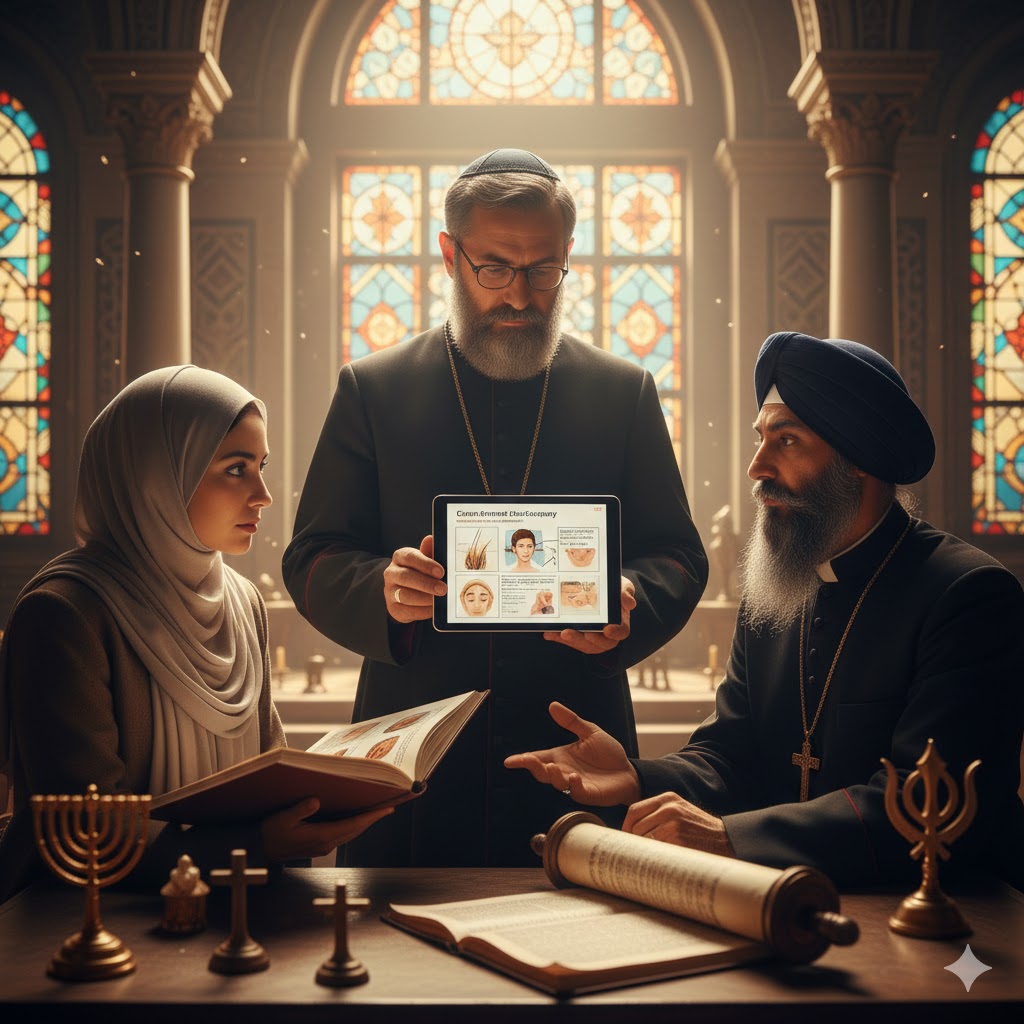
Hair has long held deep symbolic meaning across cultures and religions. It can represent strength, modesty, devotion, identity, or even spiritual discipline. When hair loss occurs—whether due to genetics, illness, or aging—it often affects more than appearance. For many individuals, it raises important ethical and spiritual questions, especially when considering hair restoration or cosmetic surgery.
Understanding how different religious traditions view hair restoration can help individuals make decisions that align not only with their personal goals but also with their faith and values. This blog explores religious perspectives on hair restoration and cosmetic surgery, offering clarity for those navigating both spiritual beliefs and modern medical options.
Why Hair Holds Spiritual and Cultural Significance
Across many belief systems, hair is more than a physical feature. It can symbolize humility, power, purity, or submission to a higher authority. Religious teachings often address how hair should be worn, covered, cut, or preserved, which naturally influences views on altering it through medical procedures.
Hair loss, however, is rarely discussed directly in ancient religious texts. As a result, many modern interpretations focus on broader principles such as intention, necessity, modesty, and respect for the body.
Hair Restoration and Intent: A Common Ethical Theme
One recurring concept across religions is intention. Cosmetic procedures undertaken to deceive, promote vanity, or alter one’s identity may be viewed differently than treatments aimed at restoring normal function or alleviating emotional distress.
Hair restoration often falls into a unique category. Rather than creating something artificial, it typically restores what was naturally present before hair loss occurred. This distinction plays a key role in how many religious scholars and leaders interpret its permissibility.
Islamic Perspectives on Hair Restoration
Restoration vs. Alteration
In Islam, the human body is considered a trust from God, and altering it unnecessarily can be discouraged. However, Islamic scholars often differentiate between altering creation and restoring what has been lost.
Hair restoration is widely viewed as permissible when it aims to correct hair loss caused by illness, genetics, injury, or aging. Procedures such as hair transplants are often compared to medical treatments rather than cosmetic enhancements.
Hair Transplants and Medical Ethics
A key consideration in Islamic rulings is the source of the hair. Since modern hair transplants use a person’s own follicles, many scholars agree that this avoids ethical concerns related to foreign materials. The intention to restore confidence or correct a condition, rather than deceive others, further supports permissibility.
Christian Views on Cosmetic Surgery and Hair Restoration
The Body and Stewardship
Christian perspectives vary across denominations, but many emphasize stewardship of the body. The body is often seen as a gift that should be cared for responsibly, without excessive vanity or obsession with appearance.
Hair restoration is generally viewed as acceptable when it improves quality of life, emotional well-being, or mental health. Addressing hair loss that causes distress or impacts self-esteem is often seen as an act of care rather than vanity.
Humility and Motivation
Christian teachings frequently encourage humility and inner character over outward appearance. As a result, personal motivation matters. Seeking hair restoration to feel whole or confident may be viewed differently than pursuing drastic cosmetic changes for status or external validation.
Jewish Perspectives on Hair Restoration
Healing and Well-Being
Judaism places strong emphasis on healing and preserving well-being. Medical treatments that restore function or alleviate suffering are generally encouraged. Hair loss, particularly when it affects mental health or dignity, can fall within this framework.
Hair restoration procedures using one’s own hair are often considered permissible, especially when they do not violate other religious laws regarding modesty or bodily harm.
Natural Restoration
Similar to Islamic perspectives, Jewish views often focus on whether a procedure restores a natural state. Since hair transplants relocate existing follicles rather than introduce foreign elements, many rabbis view them as restorative rather than cosmetic in excess.
Hindu and Buddhist Views on Hair and the Body
Detachment and Balance
In Hinduism and Buddhism, hair can symbolize attachment to the physical world. Some spiritual traditions even involve shaving the head to signify renunciation. However, these practices are typically voluntary and symbolic.
Hair restoration is not explicitly forbidden. Instead, emphasis is placed on balance, intention, and avoiding excessive attachment to physical appearance. Choosing hair restoration for personal confidence or professional reasons is often seen as a personal decision rather than a spiritual violation.
Mindfulness and Self-Respect
From a Buddhist perspective, suffering related to self-image is acknowledged as part of the human experience. Addressing that suffering through responsible medical care—without obsession—can be consistent with mindful living.
Cultural Expectations and Religious Identity
In many communities, religious identity is deeply intertwined with cultural expectations. Hair loss can sometimes affect marriage prospects, professional roles, or social confidence, especially in cultures where appearance carries strong social meaning.
Hair restoration, in these contexts, may be viewed not as vanity but as a way to meet societal expectations while preserving dignity. Religious guidance often adapts to these realities, focusing on compassion rather than rigid judgment.
Ethical Considerations Shared Across Faiths
Honesty and Transparency
One shared ethical principle is honesty. Procedures intended to deceive others or misrepresent identity may raise concerns. Hair restoration, however, typically restores rather than disguises, making it ethically distinct from more extreme cosmetic alterations.
Health and Safety
Across religions, safeguarding health is paramount. Seeking treatment from qualified professionals, avoiding unsafe or unregulated procedures, and prioritizing long-term well-being are universally supported values.
Psychological Impact
Many religious leaders now recognize the emotional toll of hair loss. Anxiety, depression, and loss of confidence are real concerns, and addressing them through ethical medical means is increasingly accepted.
Making a Faith-Aligned Decision
If religious concerns are important to you, it may be helpful to:
- Reflect on your personal intention for seeking hair restoration
- Consult trusted religious scholars or spiritual advisors
- Choose medically sound, ethical treatment options
- Avoid procedures that involve deception or unnecessary risk
Modern hair restoration offers solutions that are conservative, medically grounded, and respectful of individual beliefs.
Conclusion: Respecting Faith While Restoring Confidence
Religious perspectives on hair restoration and cosmetic surgery are more nuanced than many people assume. Across faiths, there is a shared understanding that restoring what has been lost—especially when it supports emotional well-being and dignity—is fundamentally different from altering oneself for vanity.
Hair restoration, when approached thoughtfully and ethically, can align with religious values centered on health, intention, and self-respect.
At ZMD Hair, we understand that hair restoration is not just a medical decision—it’s a personal one. Our experienced team takes a respectful, transparent approach to treatment, helping you explore options that align with both your goals and your values. Contact ZMD Hair today to schedule a confidential consultation and take the next step toward restoring your hair with confidence and peace of mind.