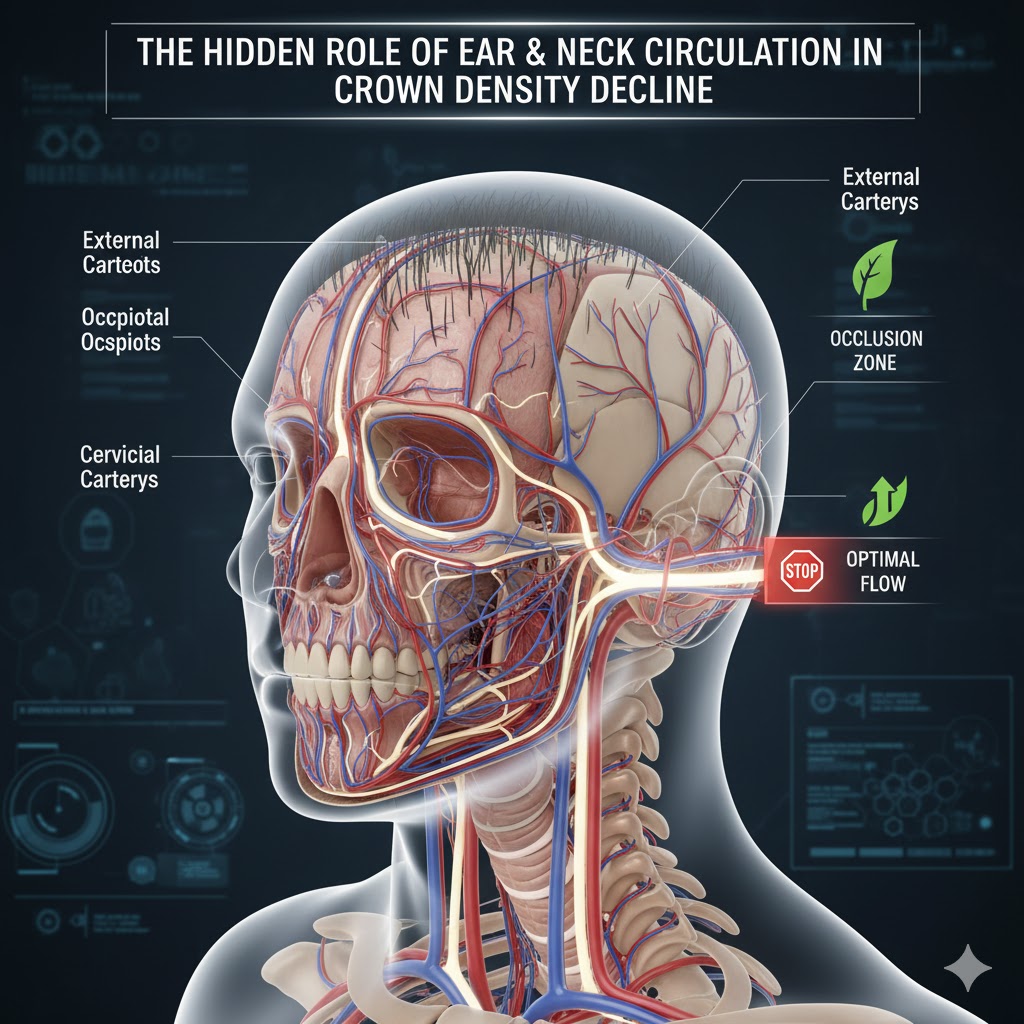
Most conversations about hair loss focus on hormones, genetics, nutrition, or stress. But one silent contributor often goes unnoticed: circulation around the ears, neck, and upper scalp—areas that directly influence blood flow to the crown.
If you’ve ever wondered why crown thinning often feels stubborn or why some people lose density at the top of the head even when the rest of their hair seems healthy, the answer may lie in the vascular network running behind the ears and along the neck. These arteries and micro-vessels act as supply lines, delivering oxygen, nutrients, and growth factors to the follicular units that keep crown hair thick.
At ZMD Hair, we’ve seen an increasing number of patients whose shedding or crown thinning is closely tied to circulation patterns rather than classic androgenic pathways alone. Understanding this hidden link can change how we approach early hair loss—and may offer a new path for individuals who feel their crown density is declining without a clear reason.
Why Crown Density Depends on Ear and Neck Circulation
The crown sits at the intersection of several key vascular channels. The superficial temporal artery (running in front of the ear), the posterior auricular artery (behind the ear), and the occipital artery (at the back of the head) are the primary pathways that feed the scalp.
When circulation along these routes is compromised—whether by lifestyle, posture, inflammation, or muscular tension—follicles at the crown may not receive the nourishment required for optimal growth.
A Delicate Supply Chain
Unlike the frontal hairline, which receives broader vascular support, the crown relies on a more concentrated network. When these pathways narrow or stiffen, the crown is often the first to show signs of density decline.
Some patients describe:
- A tight sensation at the back of the head
- Scalp tenderness around the crown
- Coldness near the ears or upper neck
- Increased shedding during stressful or inactive periods
These can all be circulation-related indicators.
How Ear Circulation Influences Crown Health
The area around the ears may seem unrelated to hair growth—but it is one of the most critical zones for blood flow to the top of the scalp.
Behind-the-Ear Vascular Channels
The posterior auricular artery travels in a narrow corridor behind the ear. Any reduction in its flow directly affects the follicles supplying the crown region.
Factors that restrict this artery include:
- Chronic jaw tension
- TMJ-related inflammation
- Long-term headphone compression
- Sleeping positions that add pressure behind the ears
- High cortisol levels that tighten facial and scalp muscles
When tension builds in surrounding tissues, vessels can stiffen or constrict, reducing nutrient delivery to the follicles at the crown.
Why This Matters for Hair Growth
Follicles require continuous microcirculation to remain in the growth (anagen) phase. Even mild restriction can push vulnerable follicles into resting mode, triggering increased shedding.
Patients often report a “whirlpool thinning pattern” at the crown—a hallmark sign of weakened blood flow.
How Neck Circulation Affects Follicle Strength
The neck carries major arteries upward toward the scalp, particularly the external carotid branches that supply the back and top of the head. When neck circulation suffers, the crown feels it first.
Muscle Tension and Restricted Flow
The upper neck contains muscles like the sternocleidomastoid (SCM), splenius capitis, and upper trapezius. When tight—often from:
- Poor posture
- Desk work
- Phone use
- Chronic stress
—these muscles compress vascular pathways.
This leads to:
- Reduced nutrient transport
- Poor oxygenation
- Inflammation around follicular beds
Because the crown is furthest from the heart and relies on upward blood flow, it is the most vulnerable region when circulation slows.
Posture and Crown Thinning
Modern lifestyle habits play a major role. “Tech neck” and forward-head posture strain the upper spine, reducing vascular mobility.
Over time, this can contribute to:
- Diffuse thinning on the top
- Slow hair regrowth
- Increased scalp dryness
Many patients are surprised to learn that correcting posture improves scalp comfort and reduces shedding.
The Science Behind Circulation and Follicle Aging
Follicles Thrive on Microcirculation
Each follicle has its own tiny blood vessel—called a capillary loop—responsible for feeding the dermal papilla. If these microvessels shrink or weaken, the growth cycle shortens.
Inflammation Blocks Nutrient Delivery
Chronic inflammation around the ears or neck can stiffen vessels. This is common in people with:
- Sinus issues
- Chronic headaches
- TMJ disorders
- Stress-induced muscle tension
Inflammation thickens vessel walls and reduces the speed and volume of blood reaching the scalp.
Oxygen and Growth Factor Loss
Even small reductions in oxygen weaken the matrix cells responsible for forming hair fiber. This accelerates miniaturization at the crown.
Who Is Most at Risk for Circulation-Related Crown Thinning?
While anyone can experience it, certain groups are more prone:
- People with stressful jobs or jaw clenching
- Individuals with stiff necks from computer work
- Those who wear tight headgear or heavy headphones
- People who sleep on one side for long periods
- Individuals with cardiovascular risk factors
- Patients with chronic sinus congestion
- Those experiencing high cortisol or anxiety
Many of these patients come to ZMD Hair believing they have genetic hair loss—only to discover circulation plays a major role.
How to Support Ear and Neck Circulation for Better Crown Density
While circulation isn’t the only cause of crown thinning, improving it can dramatically strengthen follicle activity.
1. Gentle Neck Mobility
Simple daily stretches can release compression around vascular pathways.
2. Scalp Massage Focused on Ear-to-Crown Routes
This stimulates the posterior auricular, temporal, and occipital channels.
3. Warm Compresses
Applying heat behind the ears and at the upper neck helps dilate vessels.
4. Avoiding Heavy Headphone Pressure
Even minor compression can reduce local blood flow.
5. Improving Posture
Aligning the spine helps prevent vessel strain.
6. Professional Scalp Treatments
At ZMD Hair, our growth factor treatments and PRP therapies enhance microcirculation and directly support crown follicle health.
How ZMD Hair Approaches Circulation-Based Thinning
Our clinic uses a combination of:
- Scalp imaging to analyze blood-flow patterns
- Vascular-focused treatment planning
- Growth factor therapies that support microcirculation
- Nutritional correction and inflammation control
- Lifestyle guidance to reduce tension around the ears and neck
We believe crown thinning should never be dismissed as “inevitable.” In many cases, addressing circulation transforms the density and vitality of the scalp.
Conclusion: Circulation Matters More Than You Think
Crown thinning often feels mysterious, frustrating, or unpredictable—but the answer may lie just behind the ears or along the neck. When circulation weakens, follicles lose their lifeline. By understanding the vascular pathways that nourish the crown, patients can take targeted steps to restore density, strengthen follicles, and prevent future miniaturization.
At ZMD Hair, we take these hidden factors seriously. Every scalp tells a story, and circulation is one of the most important chapters.
📞 Worried about crown thinning or sudden density loss?
Visit ZMDHair or call today to book a confidential consultation.
Together, we’ll evaluate your scalp, improve circulation, and create a customized plan to help your crown grow stronger, fuller, and healthier again.