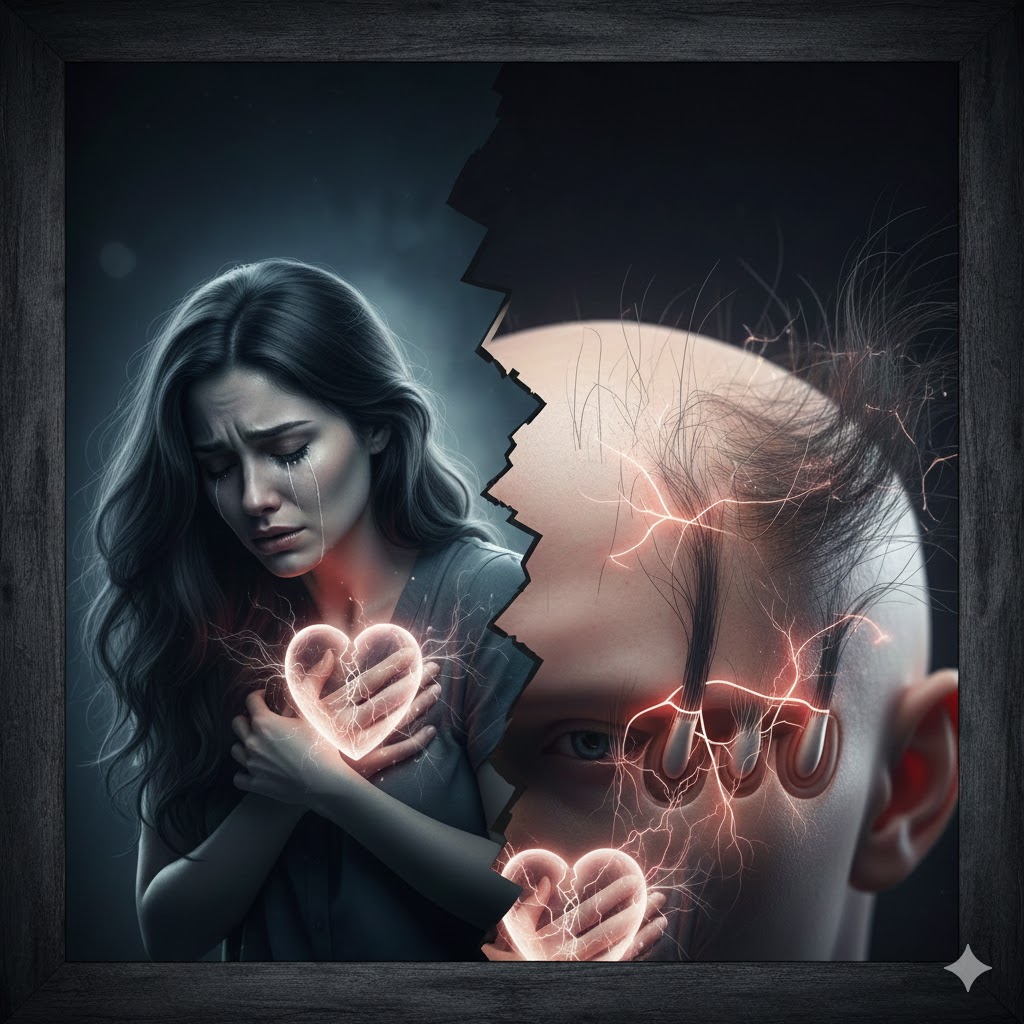
Emotional trauma has a way of leaving fingerprints on the body—tight shoulders, sleepless nights, loss of appetite, unpredictable mood shifts. But one of the most overlooked consequences is sudden hair loss. Many people are shocked when, weeks after a painful breakup, a loss, a major life change, or a high-stress event, they begin to shed far more hair than usual.
At ZMD Hair, we’ve seen this pattern again and again: the emotional story that lives behind the follicles. Hair loss is not just physical; it’s deeply tied to the mind, the nervous system, and the body’s ability to cope with overwhelming stress. When the heart breaks, the hair often responds.
This blog explores how emotional trauma triggers sudden shedding, why the body reacts this way, and how people can begin to reverse the cycle with compassion, science, and supportive care.
Understanding Emotional Trauma and Its Impact on the Body
Trauma isn’t limited to catastrophic events—it includes any emotional experience that overwhelms a person’s ability to cope. Breakups, caregiving burnout, sudden loneliness, betrayal, financial stress, work instability, long-term anxiety, or losing a loved one can all qualify.
The body interprets emotional trauma the same way it interprets physical danger. It sends out powerful biochemical signals designed to prioritize survival—not hair growth.
Key stress hormones like cortisol, epinephrine, and CRH (corticotropin-releasing hormone) surge through the system. These hormones have direct consequences for the hair follicle, which is more stress-sensitive than most people realize.
How Emotional Trauma Triggers Sudden Hair Loss
The Stress-Follicle Connection
Hair follicles operate in a delicate cycle:
- Anagen – growth
- Catagen – transition
- Telogen – resting
Trauma accelerates a shift into the telogen phase, a condition known as telogen effluvium. This causes shedding 6–12 weeks after the triggering event.
Blood Flow Disruption
When the body senses danger, it redirects blood flow toward vital organs. The scalp becomes a lower priority, receiving less oxygen and fewer nutrients.
Inflammatory Cascade
Emotional trauma activates the immune system. Increased inflammation around follicles weakens the hair shaft and encourages premature release.
Sleep and Appetite Disturbances
Trauma often leads to poor sleep and nutritional imbalance—two major contributors to hair thinning.
Hormonal Imbalance
Trauma can disrupt:
- Estrogen
- Testosterone
- Thyroid hormones
All of which play essential roles in hair growth.
In essence, the scalp becomes a mirror of emotional distress.
The Emotional Weight of Sudden Shedding
Many patients describe the experience of trauma-induced shedding as a double heartbreak:
- The emotional pain itself
- The shock of watching their appearance change overnight
This can lead to:
- Hypervigilance (checking the mirror constantly)
- Anxiety surrounding showers or brushing
- Fear that hair won’t grow back
- Withdrawal from social activities
- A deep sense of losing control
At ZMD Hair, we emphasize that this type of shedding is not a sign of permanent hair loss. The follicles are shocked—not destroyed. With the right support, recovery is not only possible but expected.
Scientific Insights: How Trauma Alters Hair Biology
Recent research in psychodermatology has revealed the depth of the mind-body connection:
- CRH receptors exist directly within hair follicles. Trauma activates these receptors, triggering inflammation.
- Elevated cortisol shortens the growth phase of the follicle.
- Trauma increases substance P, a neuropeptide that encourages mast cell activation—leading to itching, burning, and shedding.
- Chronic emotional stress disrupts the hair’s circadian rhythm, weakening nightly repair cycles.
These findings confirm what many patients intuitively feel: emotional wounds echo through the scalp.
Types of Hair Loss Linked to Emotional Trauma
Telogen Effluvium
The most common—large amounts of shedding triggered 1–3 months after trauma.
Alopecia Areata
Severe emotional stress can activate autoimmune pathways, leading to patchy hair loss.
Stress-Induced Thinning
Prolonged trauma weakens the growth cycle, causing diffuse thinning over time.
Scalp Tension Syndrome
Emotional stress can cause chronic tightening of scalp muscles, reducing circulation.
How Emotional Healing Supports Hair Recovery
1. Calming the Nervous System
Mindfulness, deep breathing, EMDR therapy, or somatic work reduces cortisol levels and helps stabilize the growth cycle.
2. Rebuilding Sleep Patterns
Restorative sleep allows follicles to repair and transition back into anagen.
3. Nutritional Reinforcement
Trauma often suppresses appetite, leading to deficiencies in:
- Ferritin
- Vitamin D
- B12
- Omega-3s
All crucial for strong regrowth.
4. Scalp Therapies
Treatments like PRP, growth factor therapy, and LLLT can accelerate recovery when follicles are in shock.
5. Emotional Expression
Talking about grief, fear, or anxiety helps reduce physiological tension around hair follicles.
6. A Supportive Environment
The combination of emotional care + medical treatment produces the most consistent long-term results.
How ZMD Hair Supports Patients Experiencing Trauma-Induced Hair Loss
At ZMD Hair, we understand that hair loss caused by trauma isn’t “just hair loss.” It’s the visible impact of invisible emotional weight.
Our approach includes:
- Scalp imaging to assess follicle shock
- Detailed stress + hormone evaluations
- Lab testing to identify deficiencies triggered by trauma
- Customized treatment plans that pair medical therapy with scalp repair
- Guidance on stress-regulation habits
- Emotional awareness-based support for patients navigating difficult chapters
We treat the person—not just the symptom.
Our patients often tell us that addressing the emotional roots of their shedding was just as important as the clinical treatments themselves.
Conclusion
Emotional trauma can shake the entire body—and the scalp is one of the first places to respond. When the heart breaks, the follicles truly do listen. But the good news is that trauma-induced hair loss is recoverable. With the right support, follicles can return to full strength, and shedding can stabilize far faster than many expect.
If you are experiencing sudden shedding after a painful emotional event, you don’t have to navigate it alone. Your hair is responding to overwhelm—not failing you.
📞 Ready to begin healing your scalp after emotional trauma?
Visit ZMDHair.com or call today to schedule your private consultation.
Together, we’ll calm the nervous system, restore your follicles, and support both your emotional and physical recovery—so your confidence and your hair can grow back stronger than ever.