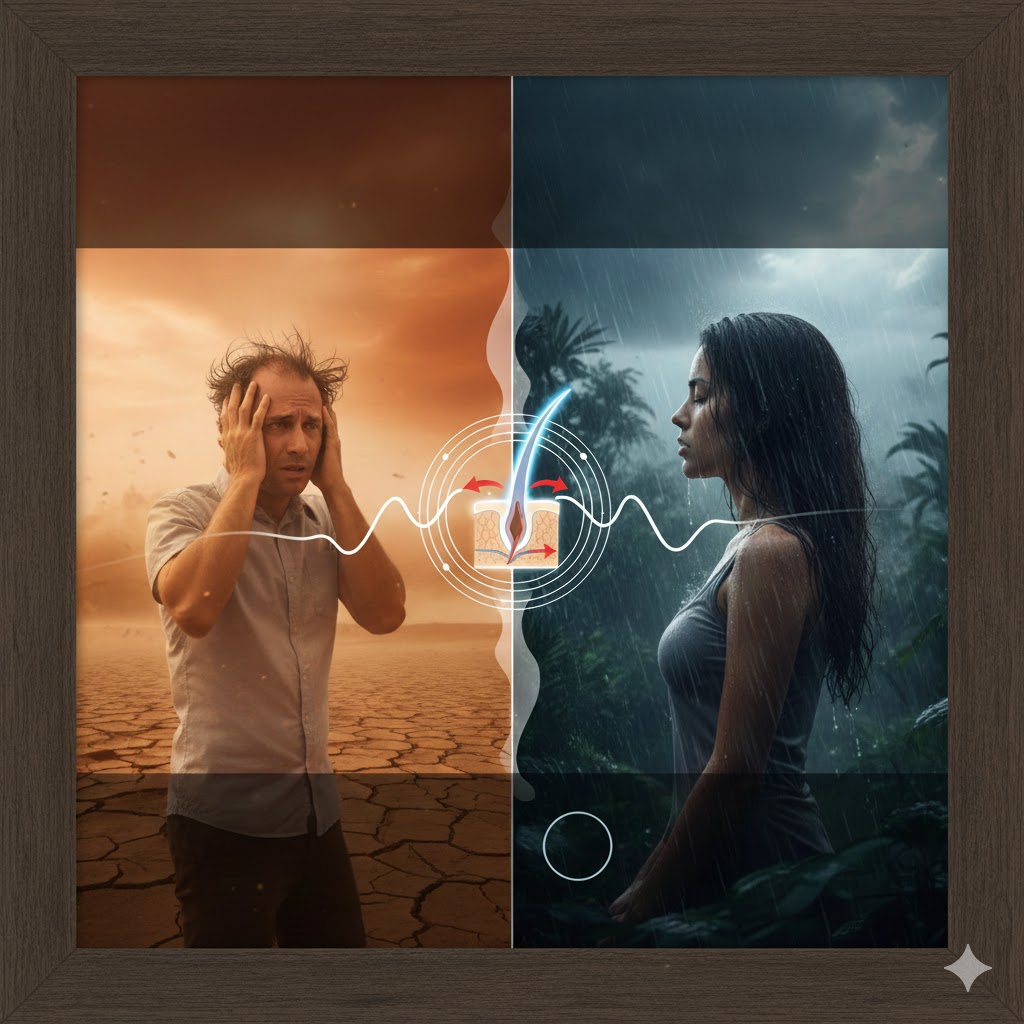
Hair loss is rarely caused by a single factor. Hormones, nutrition, genetics, stress, and scalp health all play their roles—but what many people overlook is one of the biggest environmental triggers: weather.
From scorching desert winds to heavy monsoon humidity, extreme climates can silently place enormous stress on the hair shaft, follicles, and scalp barrier. For people already experiencing thinning, shedding, or scalp sensitivity, weather fluctuations can worsen symptoms significantly.
At ZMD Hair, we often hear from patients who notice sudden shedding after seasonal changes or travel. Weather may seem harmless, but the scalp is a living ecosystem—and climates shape how it behaves.
This blog explores how extreme weather affects hair, why some scalps react more dramatically than others, and how you can protect your follicles no matter where you live or travel.
How Weather Impacts Hair Health
Weather is more than temperature—it’s wind, humidity, UV exposure, pollution density, and atmospheric pressure. All of these influence how your scalp functions and how strong or vulnerable your hair becomes.
To understand follicle stress, it helps to look at how hair responds to two opposite climate extremes: dry desert heat and heavy monsoon moisture.
Desert Winds: The Perfect Recipe for Dehydration
Hot, arid climates—like those in desert regions—are particularly damaging because they strip moisture from the hair and scalp faster than the body can replenish it.
How Dry Winds Stress the Follicles
Desert winds pull moisture from the scalp’s natural lipid barrier, creating microcracks on the surface. These microcracks lead to:
- Itching and flaking
- Increased brittleness of strands
- Weakening of follicle anchoring
- Higher sensitivity to friction
When the scalp is dehydrated, follicles struggle to maintain a stable growth environment. This can accelerate shedding in individuals prone to telogen effluvium or early androgenic thinning.
UV Exposure Intensifies the Damage
Desert regions often have intense sunlight. UV rays break down keratin—the protein that forms hair—making strands porous and fragile. They also trigger oxidative stress on the scalp, leading to inflammation around follicles.
Why Some People Shed More in Hot Climates
Those with a compromised scalp barrier, autoimmune conditions, or naturally dry skin tend to react more intensely to desert climates. Even short-term exposure during travel can cause temporary shedding cycles.
Monsoon Moisture: When Humidity Overwhelms the Scalp
At the opposite end of the spectrum is excessive humidity, which creates a different set of challenges.
How Humidity Affects Follicles
High moisture levels make the scalp a breeding ground for yeast overgrowth and inflammation. People often notice:
- Oily buildup
- Clogged follicles
- Scalp itch or redness
- Increased dandruff
- Weaker root support
Humidity causes the scalp to work overtime regulating sebum production. When sebum mixes with sweat, the follicle opening becomes congested, leading to irritation and shedding.
Monsoon Hair Fall Is Real
Many people living in tropical or rainy climates report seasonal hair fall peaks. This is because humidity weakens the hair-fiber structure and makes it more prone to breakage.
Microbial Imbalance
Moisture allows microorganisms—especially Malassezia, the yeast responsible for dandruff—to flourish. When scalp microbiome shifts, inflammation follows, and follicles become stressed.
Why Sudden Weather Changes Trigger Shedding
Even if the climate isn’t harsh, the transition between seasons—or travel between drastically different environments—can confuse the scalp’s regulatory systems.
Hair relies on stable conditions to maintain its growth cycle. When the environment shifts rapidly, the body diverts resources to temperature regulation instead of follicular nourishment.
This can temporarily push hairs into the resting (telogen) phase, leading to shedding 6–12 weeks later.
Common scenarios include:
- Moving from a cold climate to a hot one
- Returning from a humid vacation
- Weather shifts during seasonal change
- Traveling between dry and coastal regions
Patients often mistake this shedding for permanent hair loss, when in reality it may be a stress response to climate changes.
The Science Behind Climate-Induced Follicle Stress
The Scalp Barrier
Like the skin, the scalp relies on a lipid layer to maintain hydration and protect follicles. Weather extremes disrupt this barrier.
Inflammation Pathways
Heat increases blood-flow fluctuations, while humidity triggers microbial imbalance. Both can increase inflammatory markers around follicles.
Oxidative Stress
UV exposure generates free radicals that damage cells surrounding follicles.
Moisture Fluctuation
Constant swelling and shrinking of the hair shaft—common in humid climates—weakens its structural integrity.
Sweat and pH Changes
Hot or rainy climates increase sweat production, altering scalp pH and making it more prone to irritation and shedding.
Protecting Hair in Extreme Weather
1. For Desert or Dry Climates
- Use hydrating scalp serums
- Wear hats or UV-protective sprays
- Avoid over-washing
- Choose glycerin-rich conditioners
Restoring moisture balance is key.
2. For Humid or Monsoon Climates
- Use clarifying or anti-fungal shampoos as needed
- Keep hair lightly dry between washes
- Avoid heavy butters or oils that trap moisture
- Maintain microbiome health with gentle products
Clean, unclogged follicles thrive better in moist environments.
3. For Seasonal or Travel-Related Changes
- Transition your routine gradually
- Add scalp-calming treatments
- Avoid heat styling during adjustment periods
- Use protective hairstyles when traveling long distances
How ZMD Hair Helps Patients Combat Weather-Induced Shedding
At ZMD Hair, we address follicle stress from every angle—internal, external, and environmental. Our approach includes:
- Scalp imaging to evaluate inflammation and barrier integrity
- Customized treatment plans tailored to climate sensitivity
- Hydration-focused therapies for dryness-induced shedding
- Microbiome balancing strategies for humid-weather irritation
- Education on weather-specific routines to prevent damage before it starts
Weather is one variable you can’t control—but your scalp health is something you can strengthen with the right guidance.
Conclusion and Call to Action
Weather extremes may seem like background noise in daily life, but your scalp feels every shift—every gust of dry wind, every wave of humidity, every sudden temperature change. When the environment becomes unstable, the follicles often respond with stress, shedding, or inflammation.
But you don’t have to fight climate-induced hair challenges alone.
📞 Experiencing sudden shedding after weather changes or travel?
Visit ZMDHair.com or call today to schedule your private consultation.
Together, we’ll protect your follicles, restore balance, and help your hair stay strong through every season, climate, and storm.