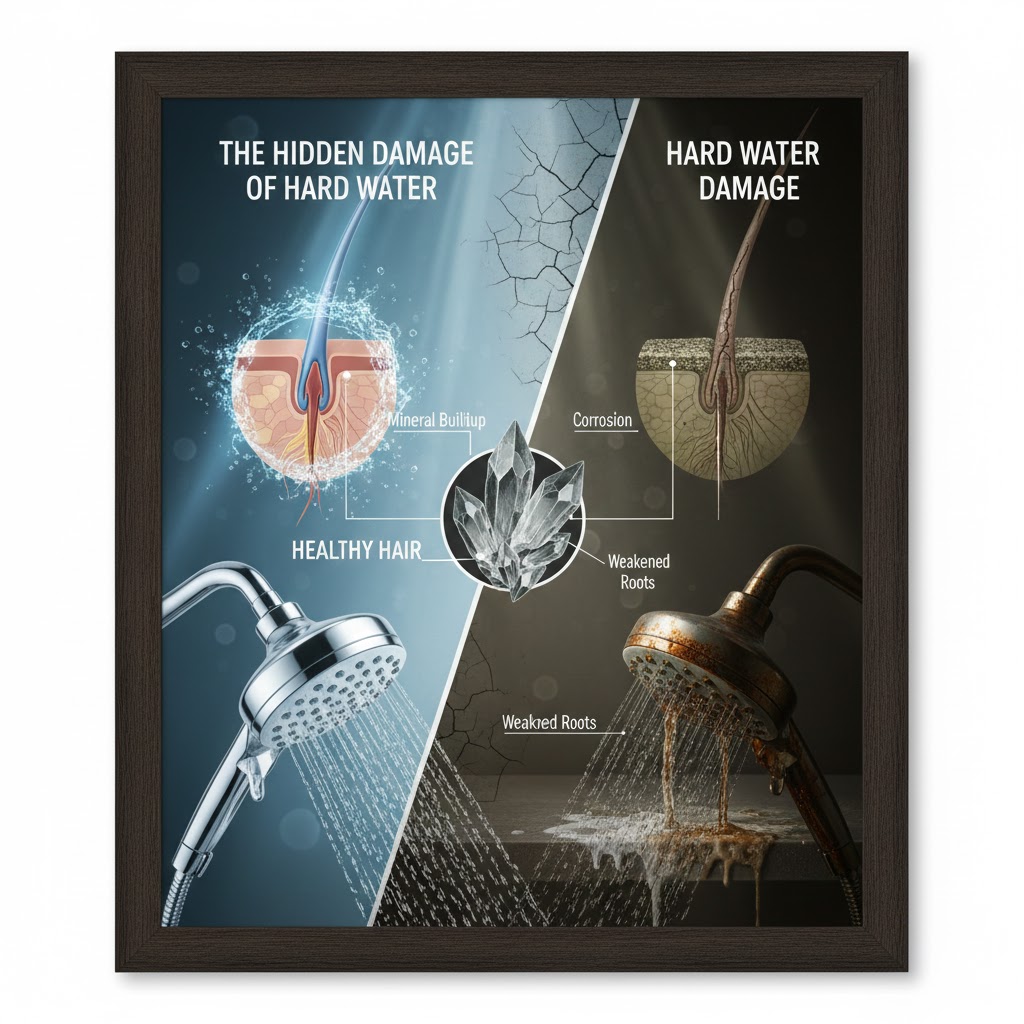
For most people, hair care starts with products—shampoos, conditioners, serums, and treatments. But at ZMD Hair, we know that the real story often begins long before you apply anything to your scalp. It begins in the water flowing from your shower.
Hard water is one of the most overlooked causes of hair thinning, breakage, dryness, and stubborn shedding. Loaded with minerals like calcium, magnesium, iron, and even traces of chlorine and heavy metals, hard water quietly interferes with the health of your follicles every single day. And despite how common it is, many people don’t realize how much of their hair distress is being caused not by genetics or stress—but by their plumbing.
This blog explores how mineral-heavy showers slowly weaken your roots, the science behind hard water hair damage, and what you can do to protect and restore your hair.
What Exactly Is Hard Water?
Hard water contains higher-than-normal concentrations of dissolved minerals—most commonly calcium and magnesium. These minerals aren’t harmful to drink, but they can dramatically alter how your hair and scalp behave.
When water evaporates, these minerals cling to everything they touch: your shower walls, your sink taps, your laundry… and your hair.
Over time, this mineral buildup turns into a microscopic “film” that coats your strands, disrupts your scalp, and makes even the best treatments work less effectively.
How Hard Water Quietly Damages Hair
Mineral Film Blocks Moisture and Nutrients
When calcium and magnesium accumulate on your hair, they form a stubborn layer that repels moisture. This leaves strands dehydrated, brittle, and more prone to snap—especially at the mid-shaft, where hair is naturally more vulnerable. Conditioners may feel like they “don’t work anymore” because your hair simply can’t absorb them.
Scalp Irritation Increases Shedding
Hard water minerals do not just coat your hair—they settle into your scalp. This can aggravate the skin, triggering dryness, itchiness, dandruff, and inflammation. An inflamed scalp can push follicles into the resting (telogen) phase prematurely, increasing daily shedding.
Many people mistake this for stress-related hair loss, when the real culprit is silent mineral inflammation.
Hard Water Disrupts Natural pH Balance
Healthy hair thrives around a slightly acidic pH. Hard water, however, tends to be alkaline. Over time, this imbalance raises the cuticle layer of the hair shaft, making strands rough, porous, and more prone to frizz and breakage. You’ll notice tangled hair, dullness, and an inability to hold moisture or styling.
Fade in Color and Damage to Chemical Treatments
For those who color or chemically treat their hair, hard water is especially damaging. Minerals interact with dyes, making color fade faster or shift tone (especially blondes). They also weaken keratin, making straightening or smoothing treatments lose their effects more quickly.
The Root-Level Impact: Why Hard Water Weakens Follicles
At ZMD Hair, we focus heavily on scalp biology. Hard water doesn’t just affect the hair you can see—it directly affects the follicle environment beneath the skin.
Follicular Blockage
Mineral buildup can clog pores around the follicles. When follicles are suffocated, their ability to produce strong, thick strands diminishes. This can lead to:
- thinning along the part
- shorter growth cycles
- increased hair fall during washing
Over time, persistent follicle stress can contribute to long-term density reduction.
Increased Inflammation
Calcium and magnesium crystals act like irritants. Even when you cannot feel it, microscopic inflammation gradually weakens follicles, especially if you already struggle with:
- telogen effluvium
- androgenic thinning
- seborrheic dermatitis
- psoriasis
A stressed follicle is far more likely to shed prematurely.
Interference With Scalp Treatments
If you’re investing in PRP, growth factors, topical serums, or medical treatments, hard water may be silently reducing your results. Mineral buildup makes it harder for active ingredients to penetrate the scalp, slowing progress.
Signs Hard Water Is Affecting Your Hair
You may be dealing with hard water damage if you notice:
- Your hair always feels dry, no matter what products you use
- Daily shedding seems higher, especially after showers
- Your scalp feels tight, itchy, or flaky
- Hair feels rough or “sticky” when wet
- Color fades unusually fast
- You need more shampoo to create lather
- You see white, chalky residue on shower fixtures
Many clients come to ZMD Hair thinking they have “complex hair loss disorders,” only to discover the water entering their home is one of the biggest contributing factors.
How to Protect Your Hair from Hard Water Damage
Install a Shower Filter
A quality shower filter removes or reduces minerals, chlorine, and metal ions. This single change often leads to noticeable improvements in softness and reduced shedding.
Clarifying Treatments
Using a gentle clarifying shampoo once every one to two weeks helps dissolve mineral buildup. The key is moderation—over-clarifying can dry the scalp.
Restore Scalp Balance
Rebalancing the scalp’s pH with medical-grade treatments can help calm irritation and restore follicular health. At ZMD Hair, we tailor protocols based on scalp imaging and root analysis to ensure treatments match your biological needs.
Professional Hair and Scalp Therapy
For long-term recovery, many individuals benefit from specialized treatments like:
- PRP therapy
- Growth factor injections
- Low-level laser therapy
- Nutritional correction
- Medical scalp detoxification
These strengthen follicles from within, counteracting years of mineral damage.
The Emotional Weight of Hard Water Damage
Hair loss is never just physical. When clients come to ZMD Hair, they often describe frustration, confusion, and helplessness—feeling like their hair is deteriorating for reasons they can’t understand.
Hard water damage is subtle, slow, and often invisible until the problem becomes serious. This uncertainty can create emotional stress, leading to more shedding. Once we identify the underlying mineral problem, the emotional relief alone helps break the cycle.
Your hair is not “failing you.” It’s reacting to an environment that has been working against it.
How ZMD Hair Helps You Rebuild Stronger Roots
Our clinic combines medical expertise with compassionate, patient-centered care. We evaluate not only your follicles but your lifestyle, environment, stress levels, and water exposure.
Our approach includes:
- High-resolution scalp imaging
- Mineral and scalp buildup assessments
- Custom growth regimens tailored to your biology
- Medical-grade therapies to reverse follicular damage
- Strategies to protect hair at home—including water quality fixes
The goal isn’t just to fight shedding. It’s to restore confidence, comfort, and long-term root stability.
Conclusion
Hard water is an invisible enemy—one that slowly disrupts your scalp, stresses your follicles, and weakens your roots over months or even years. If you’ve been struggling with unexplained shedding, dryness, breakage, or scalp irritation, your shower water may be playing a bigger role than you think.
At ZMD Hair, we help you uncover what’s really happening beneath the surface and create a science-based recovery plan that protects and strengthens your hair for the long term.
If your hair has been thinning or shedding and you’re unsure why, now is the time to take action.
📞 Visit ZMDHair.com or schedule your private consultation today.
Let us help you restore your scalp, rebuild your confidence, and grow healthier, stronger hair—starting at the root.