
Robotic Hair Transplant for Los Angeles Patients
Los Angeles is home to a population that values both appearance and precision—qualities that align naturally with robotic-assisted hair restoration. At ZMDHair, Dr. Hootan Zandifar brings UCLA-trained surgical expertise and dual board certification in Otolaryngology–Head & Neck Surgery and Facial Plastic Surgery to every robotic hair transplant procedure, offering Los Angeles–area patients a level of anatomical understanding that goes well beyond cosmetic basics.
Patients from across Los Angeles travel to ZMDHair’s Beverly Hills and Santa Monica offices to work with a surgeon whose facial and scalp anatomy training directly informs graft placement, hairline design, and long-term aesthetic outcomes. Dr. Zandifar’s membership in the American Society of Hair Restoration Surgery further reflects a commitment to staying current with evolving robotic techniques.
How Robotic-Assisted Follicular Harvesting Works
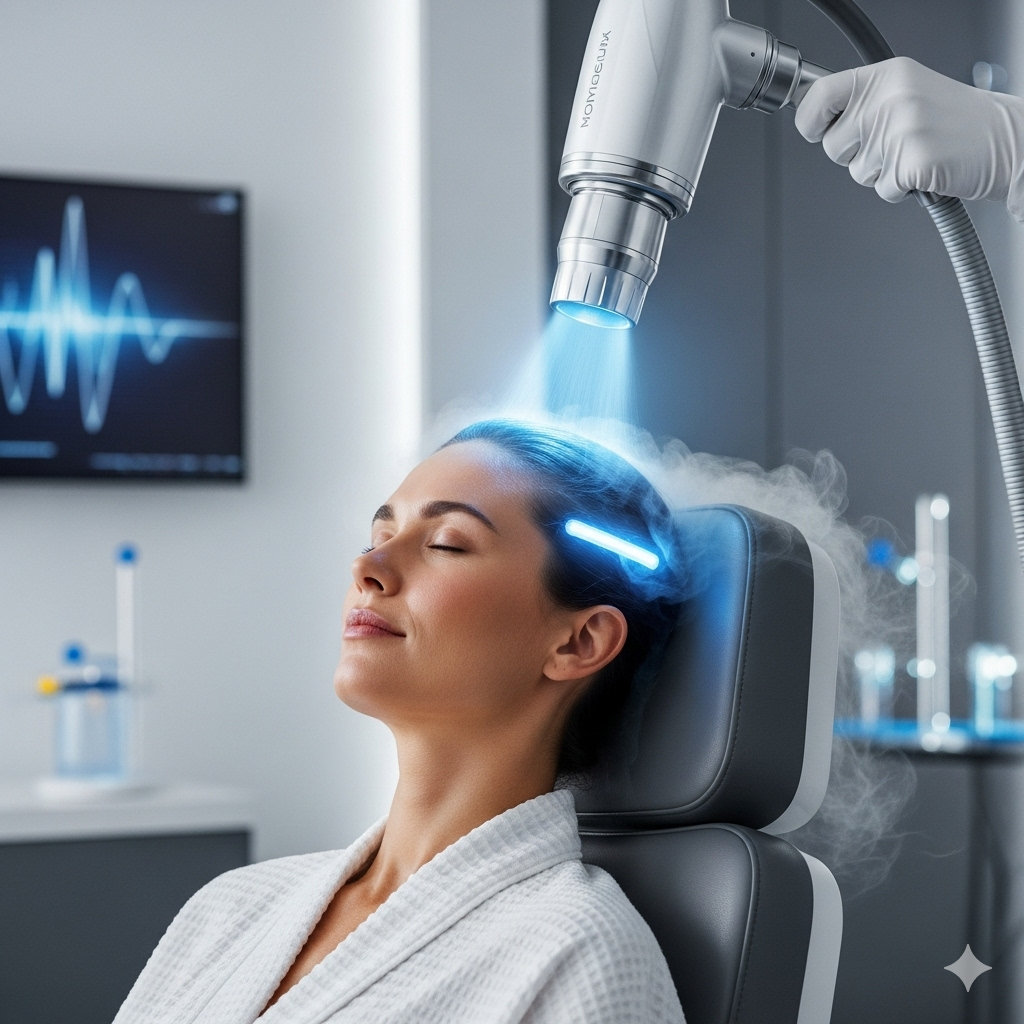
Robotic hair transplantation uses image-guided technology to assist in the follicular unit excision (FUE) process. The system maps the scalp in real time, helping to identify and score individual follicular units with a high degree of consistency before the surgeon completes the extraction and placement. This robotic assistance is designed to reduce transection rates during harvesting and support uniform graft quality across a session.
Dr. Zandifar oversees every stage of the procedure—from donor-zone planning to recipient-site creation—ensuring that the robotic component enhances, rather than replaces, surgical judgment. The result is a workflow that combines technological precision with the nuanced decision-making only an experienced facial plastic surgeon can provide.
Why Los Angeles Patients Choose ZMDHair
Many Los Angeles residents have access to a wide range of hair-restoration providers, yet they seek out ZMDHair specifically because of Dr. Zandifar’s dual board certifications and his subspecialty focus on the head and neck. Understanding the vascular supply, nerve distribution, and three-dimensional contour of the scalp is foundational to natural-looking results—and that knowledge comes from surgical training, not cosmetic certification alone.
- Double board-certified by the American Board of Otolaryngology–Head & Neck Surgery and the American Board of Facial Plastic Surgery
- UCLA-trained with deep expertise in facial and scalp anatomy
- Member of the American Society of Hair Restoration Surgery
- Conveniently located offices in Beverly Hills and Santa Monica, both accessible from Los Angeles
Are You a Candidate? The Consultation Process
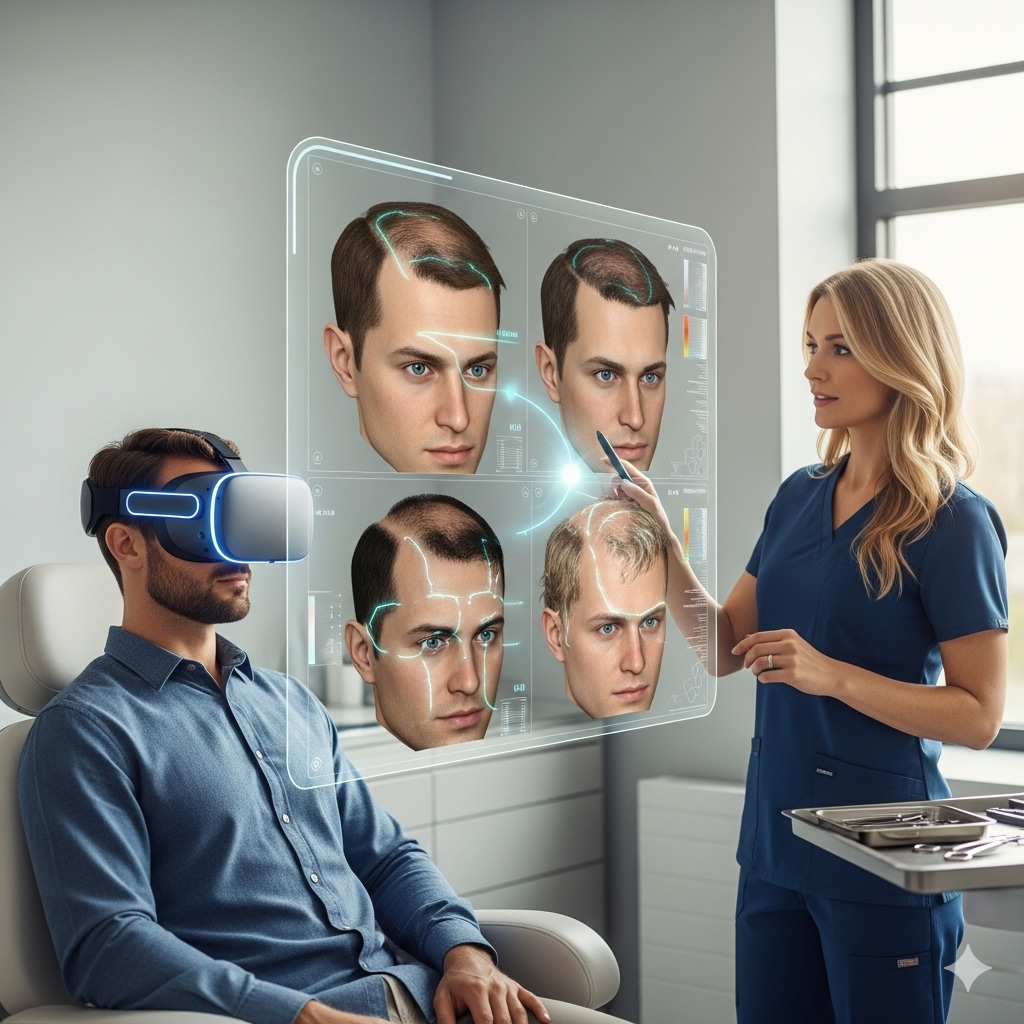
Candidacy for robotic hair transplant depends on several individual factors, including donor-hair density, the extent and pattern of hair loss, scalp laxity, and overall health. During a consultation at ZMDHair, Dr. Zandifar personally evaluates each patient’s scalp, reviews their hair-loss history, and discusses realistic expectations—without pressure or one-size-fits-all recommendations.
Los Angeles patients are encouraged to come prepared with questions about their specific pattern of thinning, any prior treatments they have tried, and their aesthetic goals. A thorough consultation is the foundation of a well-planned procedure, and Dr. Zandifar takes the time to ensure every patient understands their options before moving forward.
Recovery Timeline and What to Expect from Results
Following a robotic FUE session, most patients experience mild redness and small scab formation in the donor and recipient areas that typically resolve within one to two weeks. Because FUE does not involve a linear incision, there is no linear scar, and most patients feel comfortable returning to desk work within a few days, though strenuous activity should be avoided for a period Dr. Zandifar will specify based on the individual case.
Transplanted hairs typically shed in the weeks after the procedure before entering a regrowth phase. Visible new hair growth generally begins to appear over several months, with continued maturation over the following year. Dr. Zandifar will outline a personalized post-procedure care plan and schedule follow-up appointments to monitor progress at each stage.
Considering Robotic Hair Transplant?
Speak with Dr. Hootan Zandifar about your goals — Beverly Hills & Santa Monica.
Robotic Hair Transplant in Los Angeles — FAQ
- Do Los Angeles patients need to travel far to reach ZMDHair?
- No. ZMDHair operates offices at 8920 Wilshire Blvd, Suite 604 in Beverly Hills and 2811 Wilshire Blvd, Suite 640 in Santa Monica, both easily reachable from most Los Angeles neighborhoods.
- What makes robotic FUE different from manual FUE?
- Robotic assistance adds image-guided precision to the follicular scoring and extraction process, which can improve consistency during harvesting. Dr. Zandifar still directs all surgical decisions, including hairline design and recipient-site creation.
- How long does a robotic hair transplant procedure take?
- Session length varies depending on the number of grafts planned. Dr. Zandifar will provide a time estimate during your consultation after evaluating your individual case.
- Will there be visible scarring after a robotic FUE procedure?
- FUE leaves small circular marks in the donor area rather than a linear scar. These marks are typically not visible when hair is kept at a normal length, though individual healing varies.
- How soon can I return to daily activities in Los Angeles after my procedure?
- Most patients return to light daily activities within a few days. Dr. Zandifar will give you specific guidance on activity restrictions, sun exposure, and hair-washing protocols tailored to your recovery.